You need an architect who understands municipal facilities. A city hall, police station, courthouse, library or county service center is more than an office building. It’s where residents pay bills, attend public meetings, get permits, report problems and see their government at work. It also has to protect staff, hold sensitive records and stay in service for half a century or more.
That’s a lot to ask of one building. Here’s what a government buildings architect weighs when designing civic facilities in Arizona, and why getting those choices right pays off for decades.
Open to the public, secure for staff
The biggest design challenge in most government buildings is balancing openness with security. Residents should feel welcome, not screened like they’re entering a fortress. Staff need to feel safe and have spaces the public can’t reach.
Good civic design handles this with clear zones:
- Public zones: lobbies, service counters, meeting rooms and restrooms that are easy to find and easy to use
- Semi-public zones: areas for scheduled meetings or appointments, reached through a controlled point
- Staff-only zones: offices, records, evidence, IT and other secure areas
Well-placed service counters, sight lines from staff areas to entries, controlled doors and thoughtful lighting do much of the security work quietly. When done well, visitors barely notice it.
Designing for transparency
Government buildings send a message. Natural light, glass at public entries and council chambers that are easy to find all say “this is your building.” Public meeting spaces should be comfortable, accessible and set up for clear sound and video, since more residents now watch meetings online than attend in person.
Built for the Arizona climate
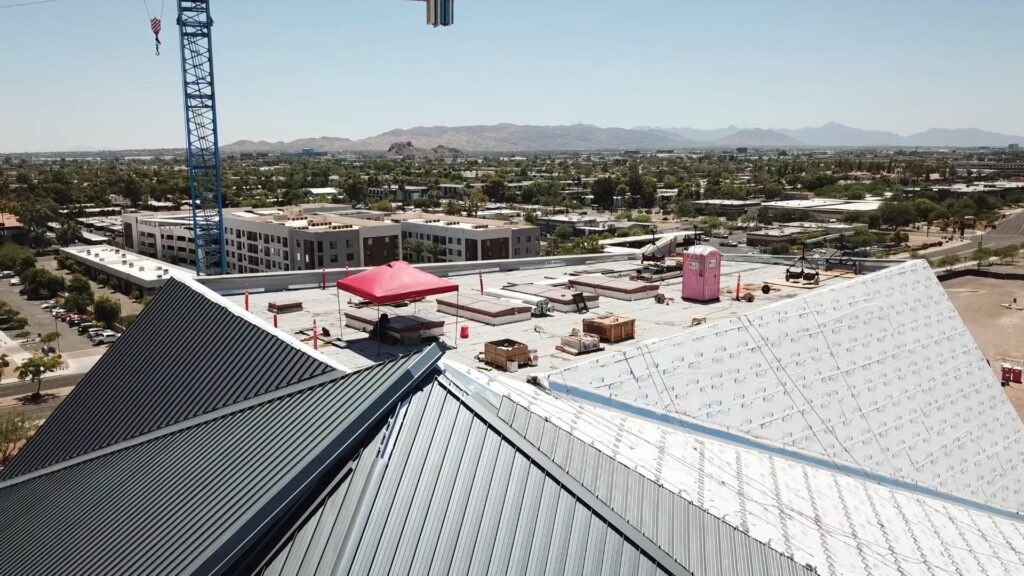
Arizona’s heat, sun and monsoon storms are hard on buildings. A government buildings architect working here plans for:
- Shade: deep overhangs, shaded entries and covered walkways for visitors waiting outside
- Heat-resistant materials: finishes and systems that stand up to intense UV and big temperature swings
- Strong roofs and drainage: roof systems and drains sized for monsoon downpours
- Efficient building envelopes: insulation, glazing and air sealing that keep cooling costs down
These choices protect the building and lower operating costs every year it’s in service.
Durable, low-maintenance materials
Public buildings see heavy daily use and have limited maintenance budgets. Materials should be chosen for how they’ll look and perform in year 30, not just on opening day. That often means durable floors in high-traffic areas, impact-resistant walls in public corridors, simple and repairable fixtures, and systems your maintenance team already knows how to service.
Involving facilities staff early in design is one of the best ways to avoid materials and systems that look great but cost too much to keep up.
Lower operating costs over the building’s life
Over a building’s life, operating costs, mainly energy, water, maintenance and repairs, usually add up to far more than the original construction cost. Small design decisions add up:
- High-efficiency HVAC with smart controls
- LED lighting with daylight sensors
- Low-water landscaping and plumbing fixtures
- Roof systems designed for long life and easy maintenance
- Space for solar panels or future upgrades
These aren’t just good for the environment. They’re good stewardship of public money.
Accessibility for everyone
Government buildings serve the whole community, so accessibility goes beyond code minimums. Clear wayfinding, accessible counters, assisted listening in meeting rooms, family restrooms and easy paths from parking all make a real difference to the people who use the building.
Planning for change
Departments grow, merge and reorganize. Technology changes. A building designed around today’s org chart may not fit in ten years. Flexible office layouts, raised floors or accessible cable paths, and room to expand on the site help the building adapt without a costly remodel.
Experience that serves the public
Architechnology has served Arizona’s public sector for 25 years. As a government buildings architect, we understand public budgets, public procurement and the long life public buildings need. Our architectural services, roofing analysis and preventative maintenance work together to support civic buildings from design through decades of use.