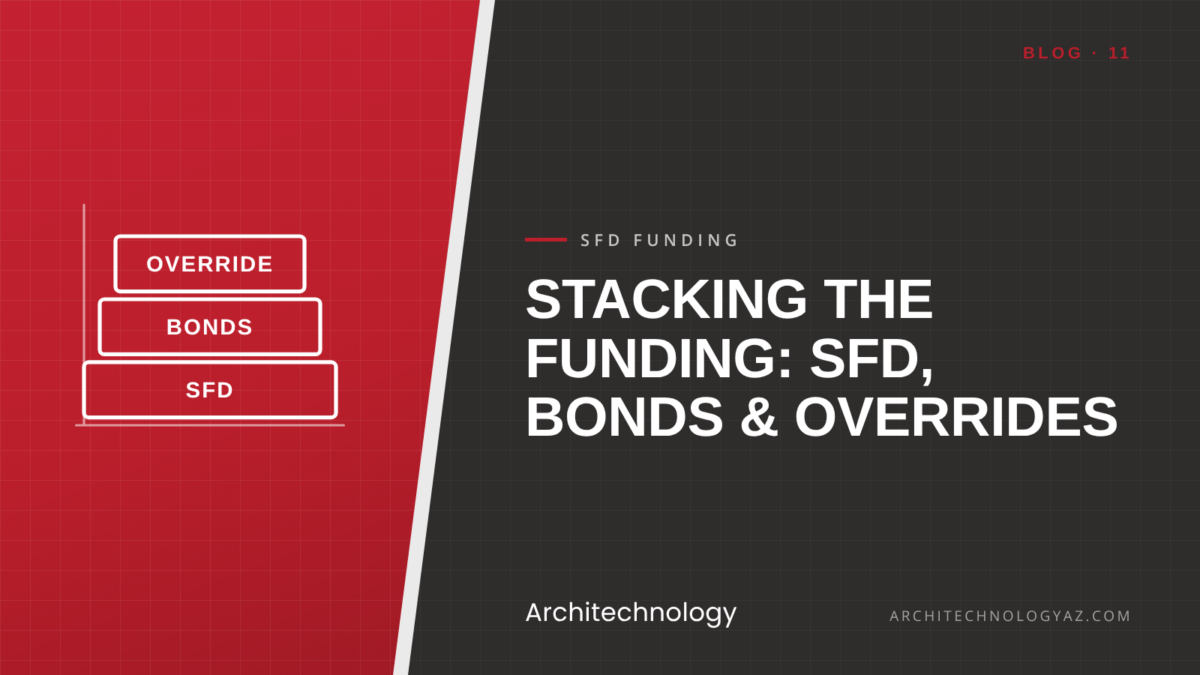
Ask any Arizona school business manager how facilities get funded and you’ll rarely hear a single answer. A new roof might come from an SFD Building Renewal Grant. A new wing might come from a bond. Technology and smaller repairs might come from a capital override or the annual capital budget.
Each source has its own rules, timelines and limits. Districts that plan across all of them, instead of one at a time, get more done with the same dollars. Here’s how to think about stacking the funding.
Know what each source is for
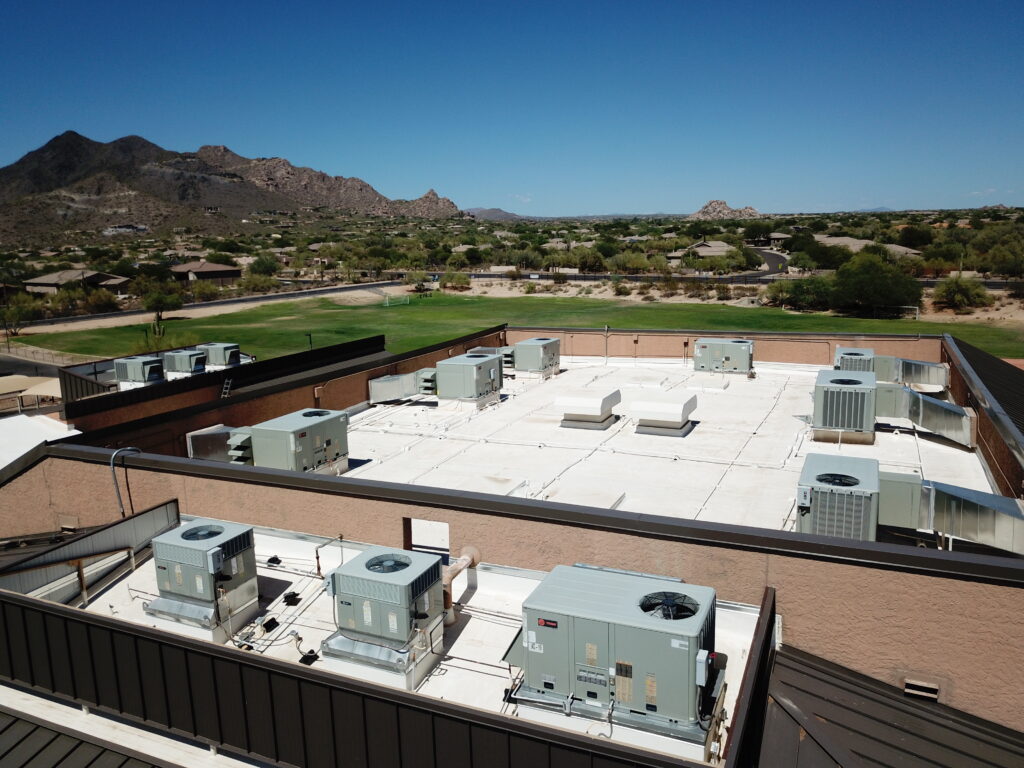
SFD funding. The Arizona School Facilities Division funds new schools for enrollment growth, Building Renewal Grants for major repairs to existing buildings, and emergency deficiency corrections. SFD dollars are best suited to fixing building systems that affect safety and function: roofs, HVAC, plumbing, electrical and life safety.
Bonds. Voter-approved bonds pay for capital projects such as new buildings, major renovations, additions, land, buses, technology and large equipment. Bonds are repaid through secondary property taxes over many years and are subject to statutory debt limits.
Capital overrides. Voter-approved capital overrides (District Additional Assistance overrides) add capital funding for a set number of years. They often pay for technology, curriculum materials, furniture, vehicles and smaller facility needs.
Annual capital budgets. Ongoing capital funding in the regular budget covers routine maintenance, smaller repairs and equipment.
Match projects to the best source
The first step in stacking is sorting your project list. For each project, ask:
- Is it a major repair of an existing system? Consider SFD first.
- Is it new space, a major renovation or a large multi-year project? Consider bonds.
- Is it equipment, technology or smaller recurring work? Consider an override or the annual budget.
- Is it routine maintenance? Keep it in the operating or capital budget.
Some projects can draw on more than one source, but be careful about mixing dollars on the same scope of work. Clear separation makes audits and reporting easier.
Sequencing SFD funding work
Timing matters as much as matching. A few principles:
- Apply to SFD early for qualifying building renewal needs, so bond dollars can go further
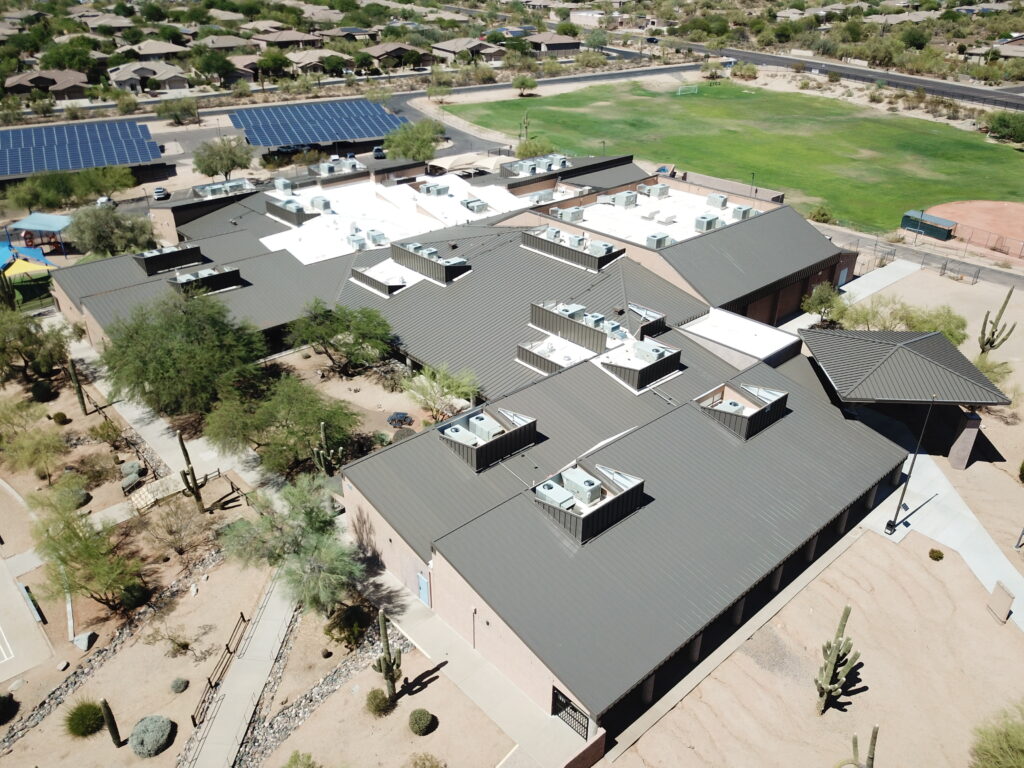
- Don’t build on a failing roof. If a renovation is planned, fix the roof and major systems first, or include them in the same project
- Phase bond projects so early wins happen in the first summer after the election
- Leave room for surprises, since bids and conditions can change
Avoid common pitfalls
- Double-counting: listing the same project in a bond and an SFD request without a clear plan for which pays
- Promising too much: bond project lists should be realistic about cost escalation
- Losing track of rules: each source has different reporting, procurement and timeline rules
- Planning in silos: facilities, finance and leadership need to work from one list
A sample funding map
Here’s a simplified example of how one district might organize its plan:
| Project | Best fit | Timing |
|---|---|---|
| Roof replacement, Elementary A | SFD Building Renewal Grant | Year 1 |
| HVAC replacement, Middle School B | SFD request, bond as backup | Year 1–2 |
| Classroom addition, High School C | Bond | Years 2–3 |
| Shade structures, three campuses | Bond | Year 1 |
| Student devices and classroom tech | Capital override | Annual |
| Drain cleaning and minor roof repairs | Annual capital budget | Annual |
A simple table like this helps your board and community understand where every dollar is going.
How a bond program manager helps
When several funding sources and dozens of projects are in play, a bond program manager keeps everything straight. That includes tracking which dollars pay for which work, managing schedules across campuses, handling procurement and reporting to the board and oversight committee.
Review your funding plan
Architechnology has supported Arizona districts with facility assessments, design and bond program management for 25 years. We understand how SFD funding, bonds and overrides fit together, and how to turn them into finished projects. Contact us to review your district’s facilities funding plan.