

Because of our unique heat exposure, any Arizona architect you partner with matters for safety as well as aesthetics. The school year starts in late July or early August, right in the hottest part of the year. Students walk to class across open campuses, eat lunch outside, play at recess and practice sports in temperatures that can climb well above 100°F. Blacktop, playground equipment and metal benches get even hotter.
Heat isn’t just a comfort issue. It affects health, attention, attendance and how much of a campus students can actually use. For the team at Architechnology, designing for heat is a core part of the job. Here’s how it shows up across a campus.
Shade where students actually are
Shade is the simplest and most effective heat strategy, but only if it’s in the right places. Good campus shade planning starts by mapping how students move and gather during the day:
- Covered walkways between buildings, bus loops and parent pickup areas
- Shade structures over playgrounds, lunch areas and outdoor seating
- Shaded waiting areas for buses and pickup, where students may stand for 20 minutes or more
- Tree planting with low-water desert species, where water and maintenance allow
The goal is to let students get from one place to another, and spend time outside, without long stretches of full sun.
Outdoor spaces that work in the heat
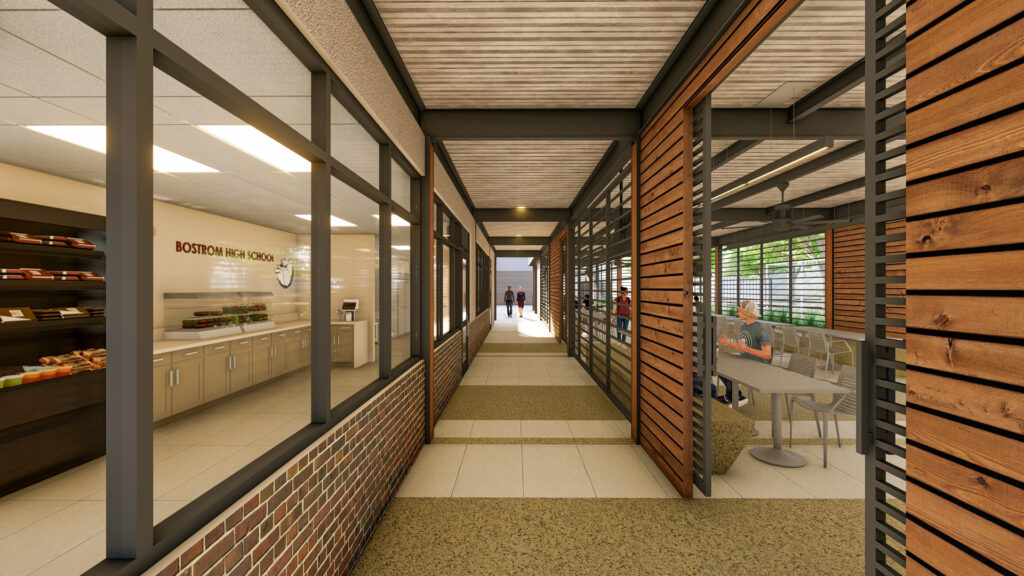
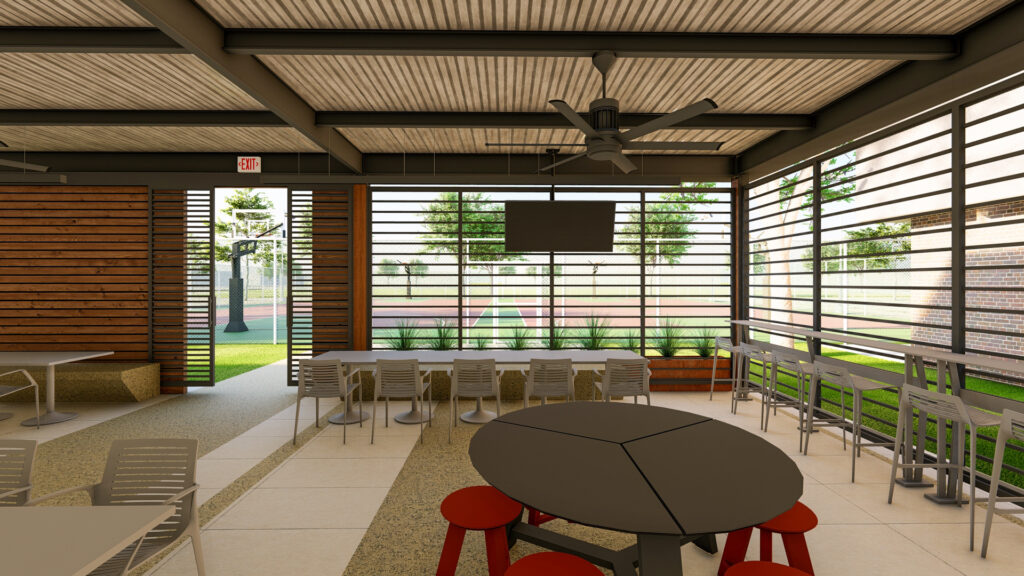
Outdoor dining, courtyards and outdoor classrooms are popular for good reasons. They free up indoor space and give students fresh air and room to move. In Arizona, they only work if they’re designed for the climate.
That means solid shade overhead, cooler surface materials underfoot, good airflow, and nearby access to water and indoor space. The new outdoor dining complex at Cactus Canyon High School, celebrated with a ribbon cutting this October, is one example of how outdoor space can become a well-used part of campus life.
Cooler surfaces
Dark asphalt and unshaded concrete store heat and release it all afternoon. Design choices that help include:
- Lighter-colored paving where glare isn’t a problem
- Shade over play surfaces and equipment
- Rubberized or turf surfaces that are tested for surface temperature
- Fewer large, open hardscape areas
These changes can make the difference between a playground students can use in September and one they can’t.

Roofs that keep heat out
The roof takes the most direct sun of any part of a building. Reflective “cool roof” surfaces, good insulation and well-maintained roof systems keep classrooms cooler and lower the load on HVAC equipment.
Roof condition matters too. Wet or damaged insulation loses much of its value, so regular roofing assessments help keep buildings performing in the heat as well as keeping water out.
HVAC built for Arizona summers
The Arizona architect you partner with should prioritize energy efficient cooling systems, and mechanical reliability in schools is essential. When it fails in August, classes can’t continue. Smart HVAC design includes:
- Zoning, so a single failure doesn’t shut down a whole building
- Equipment sized for real conditions, with room for record heat
- Controls that pre-cool buildings before students arrive
- Access for maintenance, so technicians can service units quickly and safely
- A replacement plan, since rooftop units have a limited life in this climate
Pairing HVAC replacement with roof replacement, when the timing lines up, can save money and avoid damaging a new roof later.
Building envelope and windows
Well-insulated walls, high-performance glass and shaded windows keep heat out while still letting in daylight. Orienting buildings to limit east and west exposure, and adding overhangs or fins on sunny walls, reduces heat gain without making classrooms dark.
Water and heat safety
Simple details make a big difference:
- Bottle-filling and drinking stations near play areas, fields and outdoor dining
- Cool, shaded rest areas for athletics and PE
- Indoor space for recess on extreme heat days
- Easy access to the nurse’s office from outdoor areas
Planning for heat across a district
Most districts can’t fix every campus at once. A campus heat and shade study maps where students are most exposed, ranks needs and builds a plan that can be funded over time through bonds, capital budgets or grants.
An Arizona architect you can trust: Architechnology
Architechnology has spent 25 years designing for this climate. Our architectural services, roofing analysis and preventative maintenance work together to keep schools cooler, safer and more efficient.