
Most roofs don’t fail all at once. They fail slowly, out of sight, until a ceiling tile stains, a classroom closes for a day, or a storm turns a small leak into a big repair bill. For school districts, cities and counties across Arizona, the roof is often the most expensive building system to replace and the easiest one to ignore.
A professional roofing assessment changes that. Instead of guessing which roofs need attention, you get a clear picture of every roof section you own: what condition it’s in, how long it will last, and what it will cost to fix. Here’s what a thorough assessment includes, and why it’s worth doing before the next leak makes the decision for you.
It starts with a full visual survey
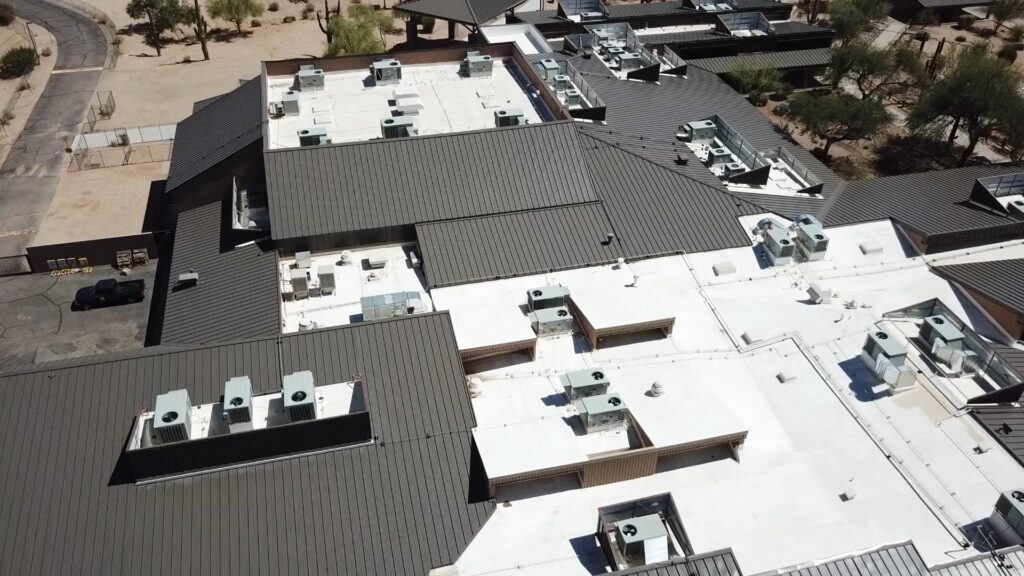
A qualified assessor walks every roof section, not just the ones with known problems. On a typical Arizona campus that can mean a dozen or more roof areas installed in different years, with different systems: built-up roofs, modified bitumen, single-ply membranes, spray foam, and metal.
The survey covers:
- The membrane or roof surface: cracking, blistering, splits, open seams, worn coatings and UV damage
- Flashings and edges: where the roof meets parapets, walls and edge metal, which is where many leaks begin
- Drains, scuppers and gutters: blockages, ponding water and signs of overflow
- Penetrations: pipes, vents, conduits and roof hatches
- Rooftop equipment: HVAC curbs, supports and the damage that service traffic causes around them
Each issue is photographed and located on a roof plan, so your facilities team can find it again.
Testing finds what eyes can’t
A dry looking roof can hold a lot of trapped water. Once moisture gets into the insulation, it spreads, adds weight, reduces insulating value and shortens the life of the whole system.
That’s why a professional roofing assessment often includes:
- Infrared (thermal) scans, usually done in the evening as the roof cools, to show where wet insulation holds heat differently than dry insulation
- Core samples, small cuts that confirm what layers are in the roof, how thick they are and whether they’re wet
- Moisture meter readings to confirm what the scan suggests
Testing is what separates a real assessment from a quick look. It tells you whether a roof can be repaired or recoated, or whether the damage is too widespread to save.
Every roof section gets a rating
Once the field work is done, each roof section is rated on the same scale. A good rating covers:
- Current condition: from good to failing
- Remaining service life: how many years the roof can reasonably last with normal maintenance
- Priority: what needs attention this year, in the next two to three years, and later
- Recommended action: maintain, repair, recoat or replace
Consistent ratings let you compare roofs across a whole campus or district, instead of reacting to whichever building complains the loudest.
The deliverable: a Roofing Assessment report you can act on
The final report should be something your business office, facilities director and board can all use. It typically includes:
- Roof plans showing each section and the problems found
- Photos of every major issue
- Cost estimates for repairs and replacement
- A recommended schedule of work by year
- Notes on warranties still in effect
That report becomes the basis for budgets, grant requests and capital plans. For Arizona schools, it can also support funding requests to the School Facilities Division, which expects documented deficiencies and realistic cost estimates.
Why an architect-led roofing assessment is different
Many roofing contractors offer free inspections. Some are excellent. But a contractor’s inspection naturally leads to a contractor’s proposal, and it rarely includes testing, ratings or a long-range plan.
An architect-led roofing assessment is independent. There’s no product to sell and no crew to keep busy. The goal is to tell you what you actually need, which is sometimes a repair that buys five more years instead of a full replacement. When replacement is the right answer, the same team can design the new roof, write the specifications, help with bidding and watch over construction so the work matches what you paid for.
Arizona roofs work harder
Roofs in the Valley face some of the toughest conditions in the country: intense UV, surface temperatures well above the air temperature in summer, big daily temperature swings, and monsoon storms that bring wind, hail and sudden heavy rain. Materials age faster here, and small problems grow quickly. Regular assessments, every few years and after major storms, are the best way to stay ahead of that.
Know what you have before you spend
A roofing assessment won’t fix a roof. What it does is make sure every dollar you spend on roofs goes to the right building, at the right time, for the right repair.
Architechnology has served Arizona’s public sector for 25 years, and roofing analysis is one of our core services. If you can’t say with confidence how many years are left on each of your roofs, contact us to schedule a roofing assessment for your district or facility.